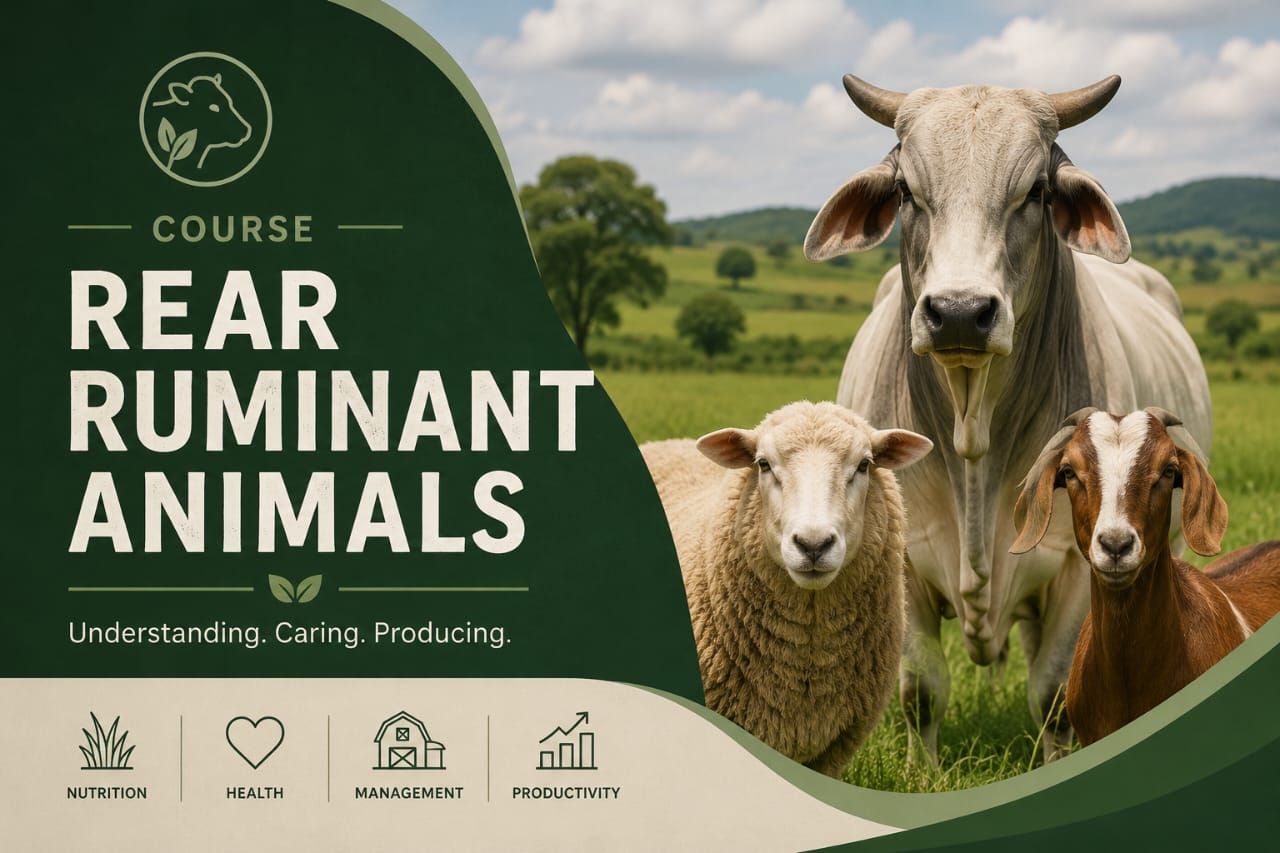
Welcome to the Rear Ruminant Animals course.
This course introduces learners to the principles and practices of rearing ruminant animals such as cattle, sheep, and goats. Learners will study breeds, housing, feeding, health management, breeding, pasture management, record keeping, and sustainable production practices. The course combines theory with practical activities to develop the knowledge, skills, and attitudes required for successful ruminant animal production.
Learning Outcomes
By the end of this course, learners should be able to:
• Identify the major ruminant animal species and breeds.
• Explain the digestive system and feeding requirements of ruminants.
• Demonstrate proper housing and handling practices.
• Apply appropriate health and disease control measures.
• Describe breeding and reproduction practices.
• Maintain farm records and evaluate production performance.
• Apply sustainable livestock production practices.
- Teacher: Admin User
Course Overview:
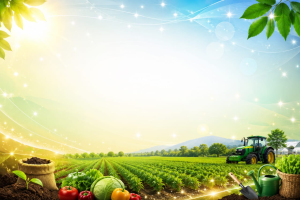
This course provides a comprehensive introduction to the fundamental principles of crop production. Students will examine the biological, environmental, and economic factors that influence crop growth and yield. The course is designed for those interested in agronomy, sustainable agriculture, and food production systems.
Key Topics:
- Plant Biology: Understanding plant structure, function, and the growth processes.
- Soil Management: Exploring soil properties, fertility, and the importance of soil health for crop production.
- Crop Selection and Management: Methods to select appropriate crops based on climate, soil types, and market demand.
- Pest and Disease Management: Strategies for managing pests and diseases to protect crop yields.
- Sustainable Practices: Techniques for sustainable farming, including conservation tillage, crop rotation, and integrated pest management.
Course Description:
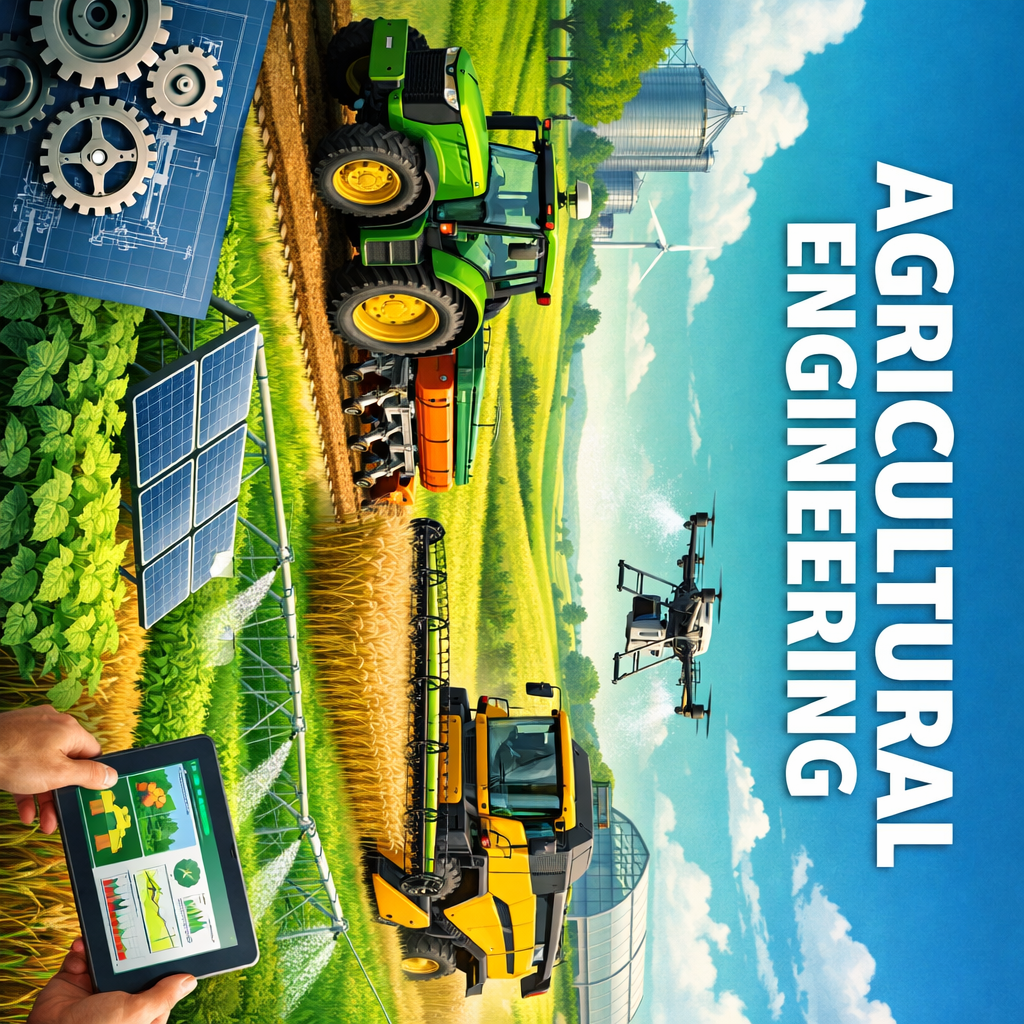
The Agricultural Engineering course provides an interdisciplinary approach to understanding the principles of engineering as applied to agricultural systems. Students will explore the design, development, and improvement of equipment and facilities used in agriculture, as well as the management of natural resources.
Key Topics Include:
- Soil and Water Engineering: Study the management of water resources, irrigation systems, and soil conservation techniques.
- Machinery and Equipment Design: Explore the design and development of agricultural machinery, tools, and equipment for efficiency and sustainability.
- Crop Production Technology: Learn about the engineering principles that enhance crop production, including plant mechanics and yield optimization.
- Food Processing and Storage: Understand the engineering aspects of food preservation, processing techniques, and storage solutions to reduce waste and enhance food safety.
- Environmental Impact: Analyze the effects of agricultural practices on the environment and explore sustainable practices to mitigate negative impacts.